
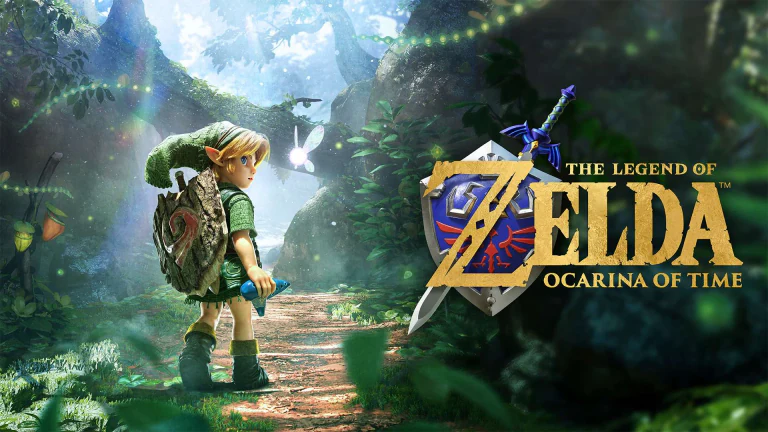
On November 5, Nintendo put a remake of a 1998 game on sale at full price, on a console still selling its first units. Four days later it had moved 5.2 million copies. The reviews came out the day before launch and settled at 96 on Metacritic, a score the site had not handed out since Baldur's Gate 3.
So what did that money buy?
01 · What it actually is
A full remake. Nintendo rebuilt the geometry, lighting, textures and cutscenes for Switch 2. The dungeons are the dungeons you remember, the story hasn't moved, and the soundtrack has been remixed for 5.1 surround. On a TV it looks like a game made this decade. This decade has not produced many that look this expensive.
Eiji Aonuma has said the project began after Tears of the Kingdom wrapped, timed to Zelda's 40th anniversary. He wanted to know what a younger team would make of a game he helped define, and he has been open about this being where his own career on the series started. Hidemaro Fujibayashi, who directed the last few Zelda games, produced it.
Switch 2 only. No Switch 1 version, and nothing announced.
02 · The 28-year-old opening
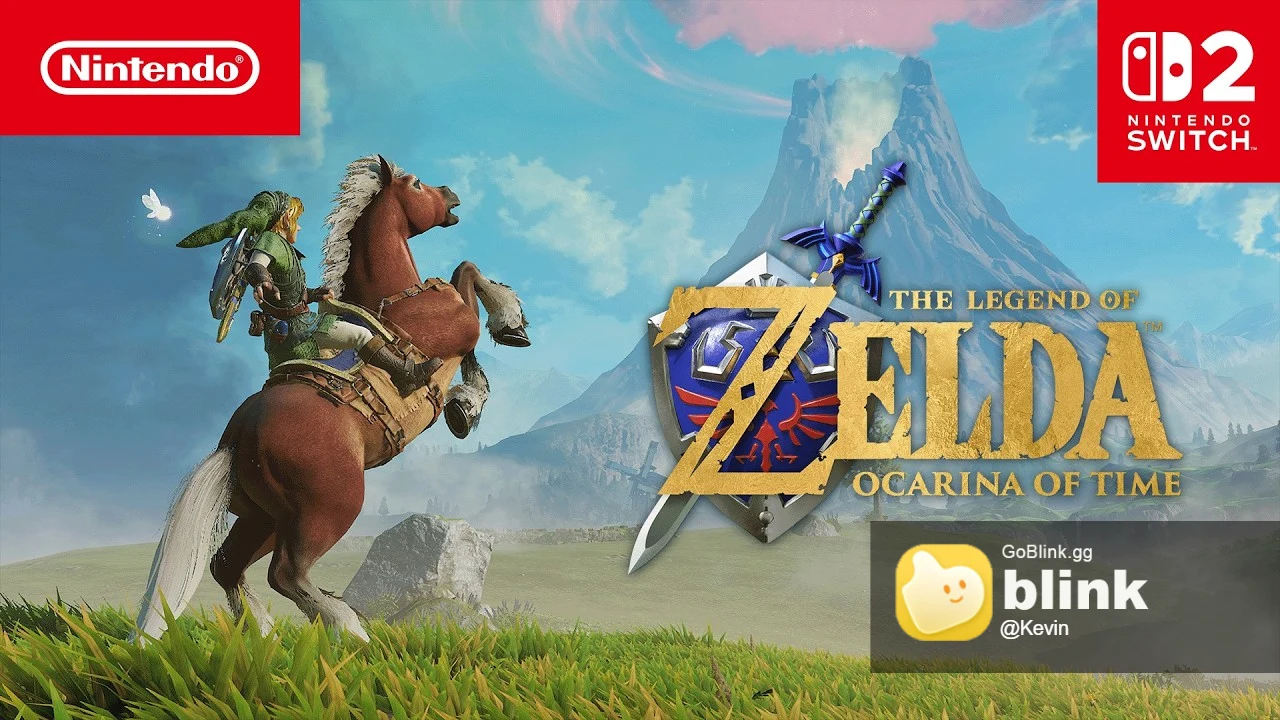
The first ninety seconds are the 1998 first ninety seconds, rebuilt. Side-by-side videos line the two intros up on the same shots, in the same order; what changes is the geometry, the lighting and the mix.
One thing is not the same. In 1998 the narration is the Great Deku Tree, first person, talking about the boy without a fairy. The June teaser used a third-person voice, past tense, opening with "long ago." Nintendo has never explained the swap, and fans spent a month guessing whose voice it was.
▶ Compare:
The marketing went further back than the game did. The new trailer rebuilds the 1998 US commercial: same structure, same horseback confrontation, same question — "Will you run?" in 1998, "Will you run? Or fight?" now. IGN ran the shot-for-shot comparison. The music is the one thing that couldn't come back; the original used a licensed recording from Conan the Barbarian, and that was never going to clear.
One claim going around doesn't hold up. People say the new opening ends on the exact frame the 1998 opening begins on, so the two can be played as one continuous shot. Back to back, it looks that way. But no producer has described it as intentional, and none of the outlets that covered the remake reported it as designed. It is a reading of the footage; Nintendo has never said it built the handoff.
03 · The numbers
Nintendo confirmed the 5.2 million figure on November 11, six days after launch. Eurogamer and DualShockers both call it the fastest-selling Switch 2 game so far.
It is a launch number, and it landed two weeks ahead of Grand Theft Auto 6. That could be confidence, or it could be a decision to get out of the way early. Either reading works. The game was in people's hands before November got crowded.
A 1998 title, full price, on a console still building an install base: five million copies in a week. Demand was never the open question.
04 · The reviews
Metacritic: 96, from 84 critic reviews. OpenCritic: 95, from 45. Both sites have it at the top of 2026, and 96 matches Baldur's Gate 3, which nothing else has reached in three years.
The individual scores are unusually tight for a remake this conservative:
- Eurogamer — 10/10
- VGC — 10/10
- GamesRadar+ — 10/10
- Destructoid — 10/10
- IGN — 9/10
- GameSpot — 9/10
- Nintendo Life — 9/10
- Famitsu — 37/40
The 1998 original is still at 99, the highest score Metacritic has ever published. The remake doesn't reach it. Neither does anything else.
The dissent is worth reading. NPR's James Perkins Mastromarino called it superb, streamlined and safe, with enormous production values and the nagging sense that every argument for taking a risk had lost. His review is the useful counterweight to a wall of 10s.
Player scores are noisier. One Japanese aggregator has it at 9.7, and there has been review-bombing alongside that, which puts the averages somewhere between a signal and a mood.
05 · What's on the menu
The campaign. The 1998 story, now fully voiced. Cutscenes were re-staged rather than upscaled, and they run longer than the originals.
Hall of Fallen Foes. A new area. Enemies you have beaten can be inspected as models with written notes, and some boss fights can be replayed outside the story.
Menus that don't stop the game. A quick-select item menu borrowed from Tears of the Kingdom, plus an objective log called Threads of Time. Both are optional, and both are aimed at people who never memorised a 1998 manual.
Controls. Manual camera on the right stick. Jump and sprint from the start instead of unlocked later. Motion controls supported.
Sound. The whole score in 5.1.
amiibo. 35 figures, mostly older Zelda ones.
Kept retro on purpose. No fast travel. The loading screens stayed in. People have opinions about both.
Not included. No Majora's Mask, no Master Quest. Aonuma wouldn't be drawn on either.
06 · What got cut
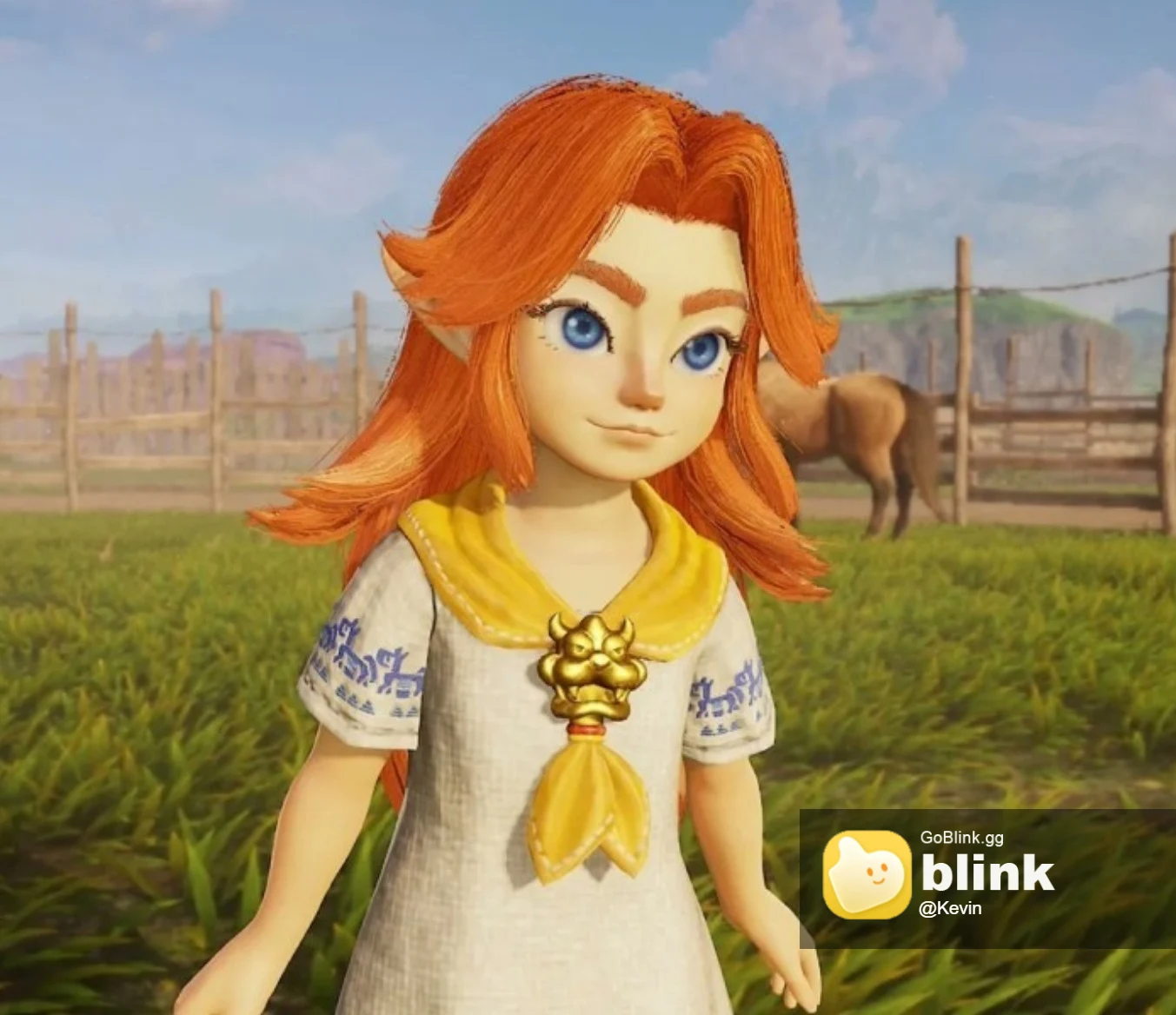
Nintendo cleaned out the crossovers. The Mario and Yoshi portraits behind a castle courtyard window are gone, replaced by a tapestry. The 3DS version's Skyward Sword art is gone too, along with a Hookshot target on a temple statue that never did anything. Aonuma's reason was that an unrelated character in the middle of a scene pulls you out of the world. Calls were made case by case, which is why the Bowser clasps on Malon and Talon survived.
07 · Who it's for
Newcomers get the friendly version. The camera, the jump button, the item menu and the objective log remove most of the reasons people bounce off the 1998 game, and the first hour still lands the way it did on a CRT.
Veterans will notice the camera before anything else. Some of the original's composed angles are gone, including the top-down view in a well-known stealth section, replaced by an over-the-shoulder camera. That's the argument, more than any easter egg.
For anyone who distrusts remakes, there is one comparison worth holding onto. People reach for Demon's Souls rather than Final Fantasy VII Remake: a meticulous rebuild with new furniture. At 96 on Metacritic, it also happens to be the most acclaimed version of a game that never needed defending.
It won't change anyone's mind about what Ocarina of Time is. It mostly proves the game still works on people who never owned a Nintendo 64.


Comments 0
Share ideas. Be kind. Keep spoilers marked.
Sign in to share your thoughts and reply to other players.